Black pepper is no longer just a household spice traded in local mandis it has evolved into a structured global agri-commodity with strategic importance. The market, valued at over $3 billion, is expanding steadily, supported by rising consumption of packaged foods, ready-to-eat meals, and growing demand for natural ingredients across developed economies. Unlike highly seasonal crops, pepper offers relatively stable long-term trading prospects. For serious traders, tracking global production trends now matters just as much as monitoring domestic arrivals and spot prices.
Export Leaders and Supply Control
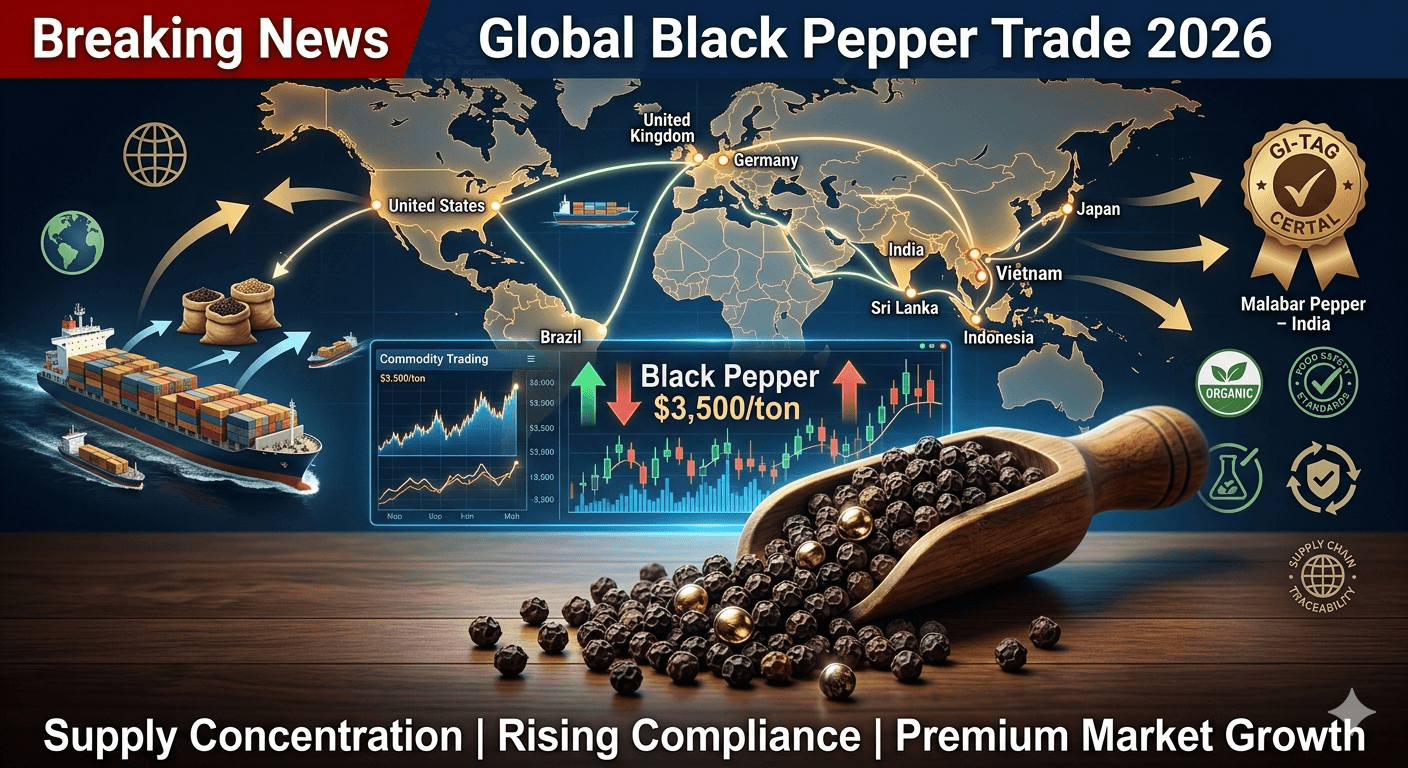
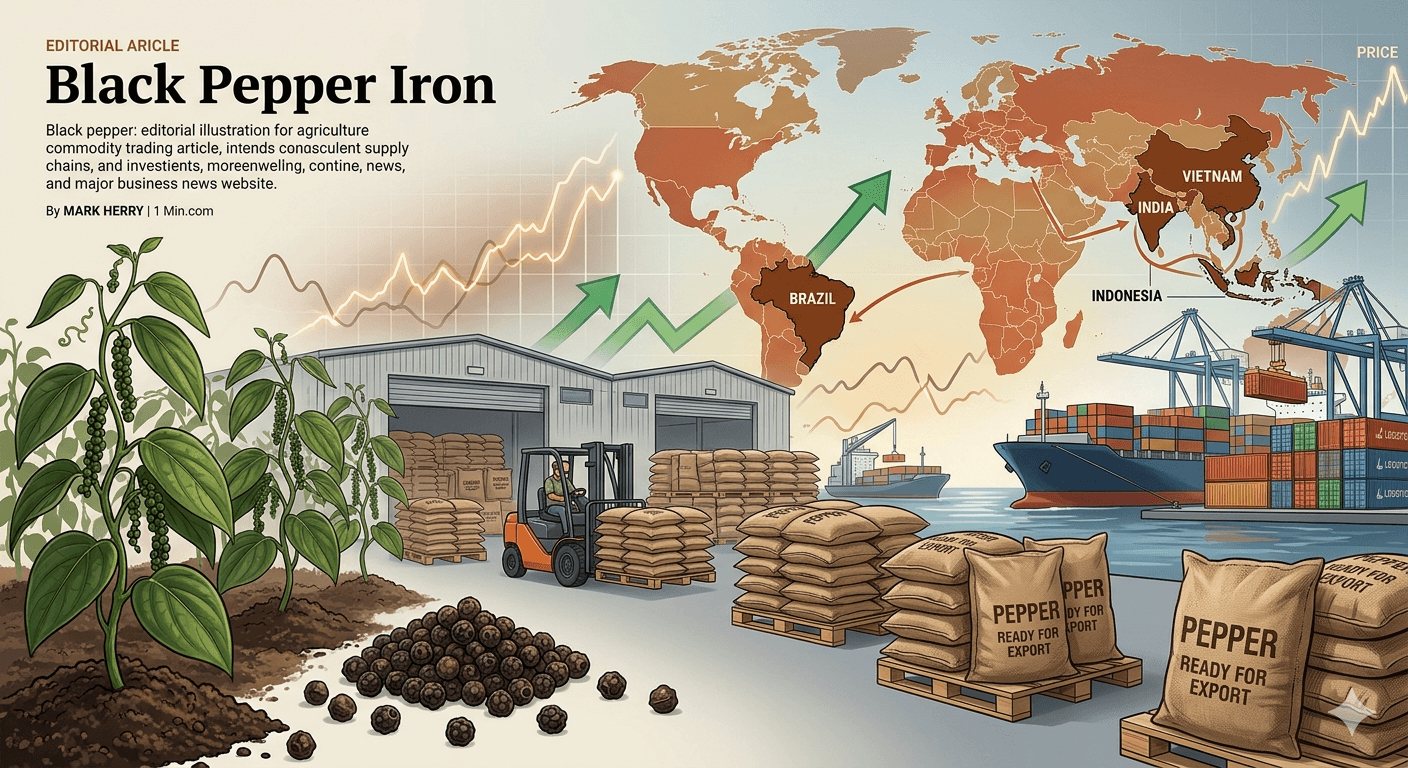
The global supply of black pepper is heavily concentrated. Vietnam leads the world with over 40% share of exports, followed by Brazil, Indonesia, Sri Lanka, and India. Vietnam’s scale, efficiency, and aggressive export strategy make it the key price influencer in the international market. Even small shifts in Vietnam’s harvest size, stock position, or export policy can trigger immediate price reactions worldwide. For traders, keeping a close watch on Vietnam’s crop updates has become essential for anticipating market direction.
Import Demand and Buyer Preferences
On the demand side, the United States remains the largest importer, with Germany, Japan, the United Kingdom, and India also playing significant roles. However, the nature of demand has changed. Buyers are increasingly focused on food safety, low pesticide residues, traceability, and proper certification. Today, compliance and documentation are as important as price competitiveness. Shipments that meet international standards move faster and secure better contracts.
Price Behaviour and Volatility
In 2026, raw black pepper is trading around $3,500 per ton, while ground pepper commands higher prices due to added processing value. Despite firm demand, the market remains sensitive to climate disruptions in producing countries, exporter stock management, currency fluctuations, and freight costs. As a result, pepper prices can shift quickly, reflecting their growing role as a globally traded commodity rather than a traditional farm product.
India’s Position in the Trade
India occupies a dual role as both exporter and importer. While it exports premium and specialty pepper, it also imports competitively priced supplies to meet domestic consumption and processing needs. Competing with Vietnam on sheer volume is difficult, but India has a clear edge in premium categories such as GI-tagged Malabar pepper, organic produce, and value-added products. The real opportunity for Indian traders lies in quality differentiation rather than bulk competition.
Strategy for Traders
The spice trade model is changing. Earlier, profits were largely driven by buying in bulk and selling in bulk. Today, higher margins come from sourcing carefully, ensuring certification, adding processing value, and targeting niche international buyers. Traders investing in sterilization, organic certification, branded retail packaging, and long-term B2B relationships are better positioned to sustain growth in a competitive global environment.
Trade Outlook
Black pepper has firmly established itself as a compliance-driven global commodity. Traders who depend solely on short-term mandi arbitrage may find margins tightening. In contrast, those who prioritize quality assurance, transparency, and value addition will unlock premium markets. In the years ahead, success in the pepper trade will depend less on stock size and more on reliability, certification standards, and consistent supply quality.