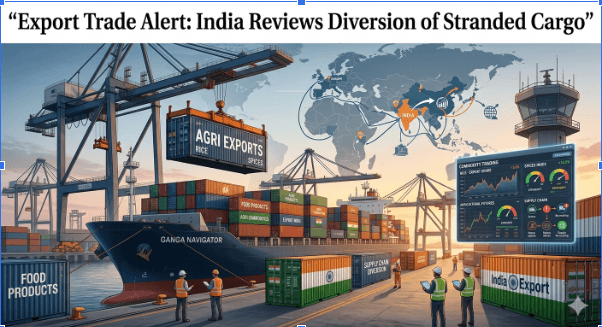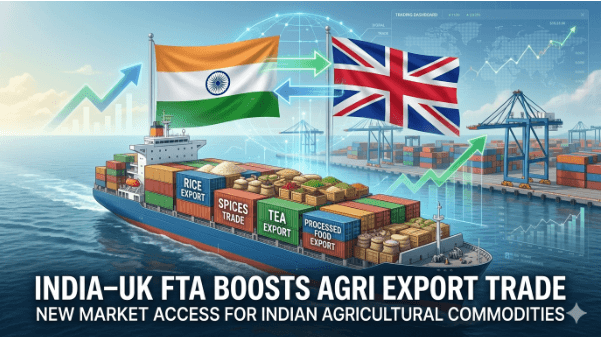
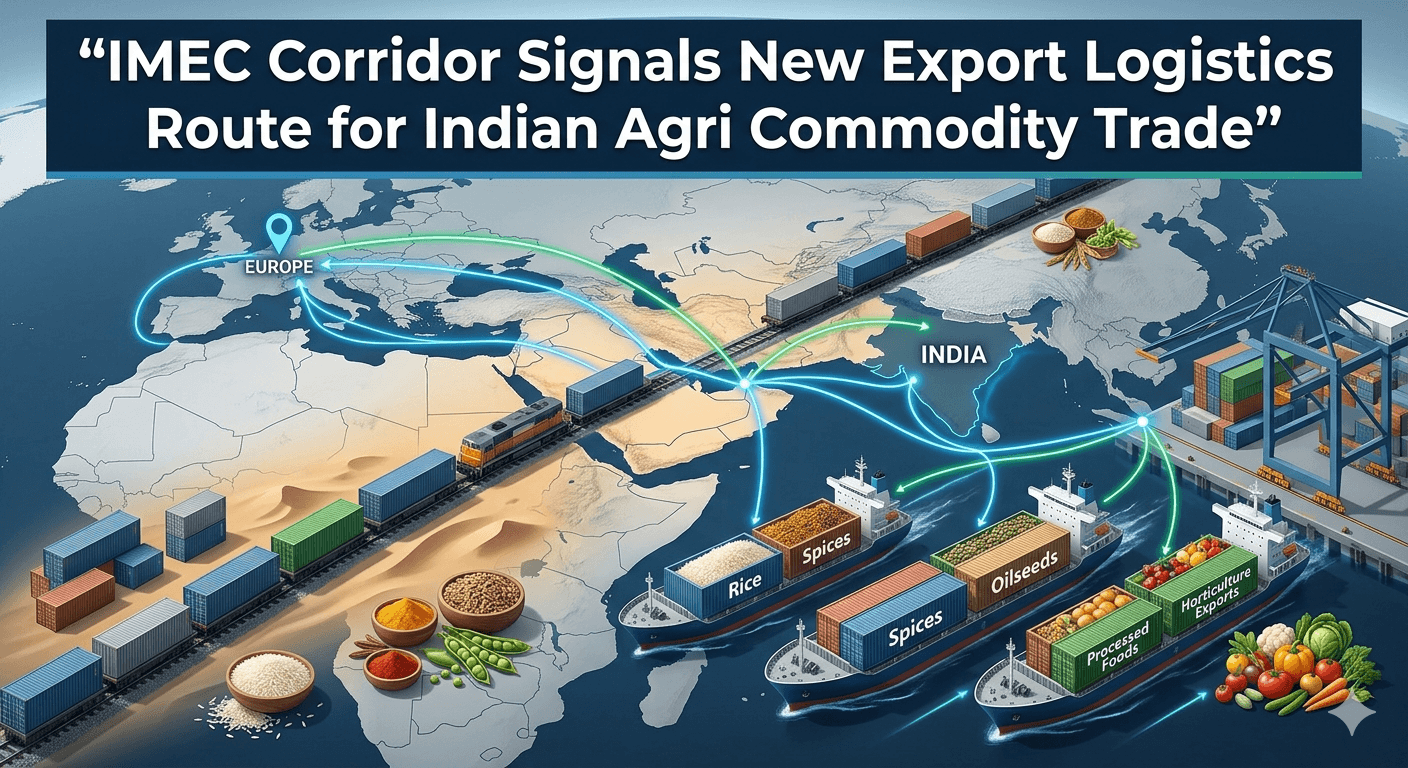
The emerging India–Middle East–Europe Economic Corridor (IMEC) is slowly taking shape as a strategic trade route linking Indian ports with Gulf logistics hubs and European markets. Built on multi-modal connectivity ports, rail networks, and digital corridors, the project aims to create a faster and more resilient supply chain between Asia and Europe. For India’s agriculture trade ecosystem, the corridor is more than diplomacy; it is a long-term export logistics framework that could reshape commodity flows, reduce transit time, and strengthen India’s position in global agri markets.
New Export Channel for Indian Agri Commodity Shipments
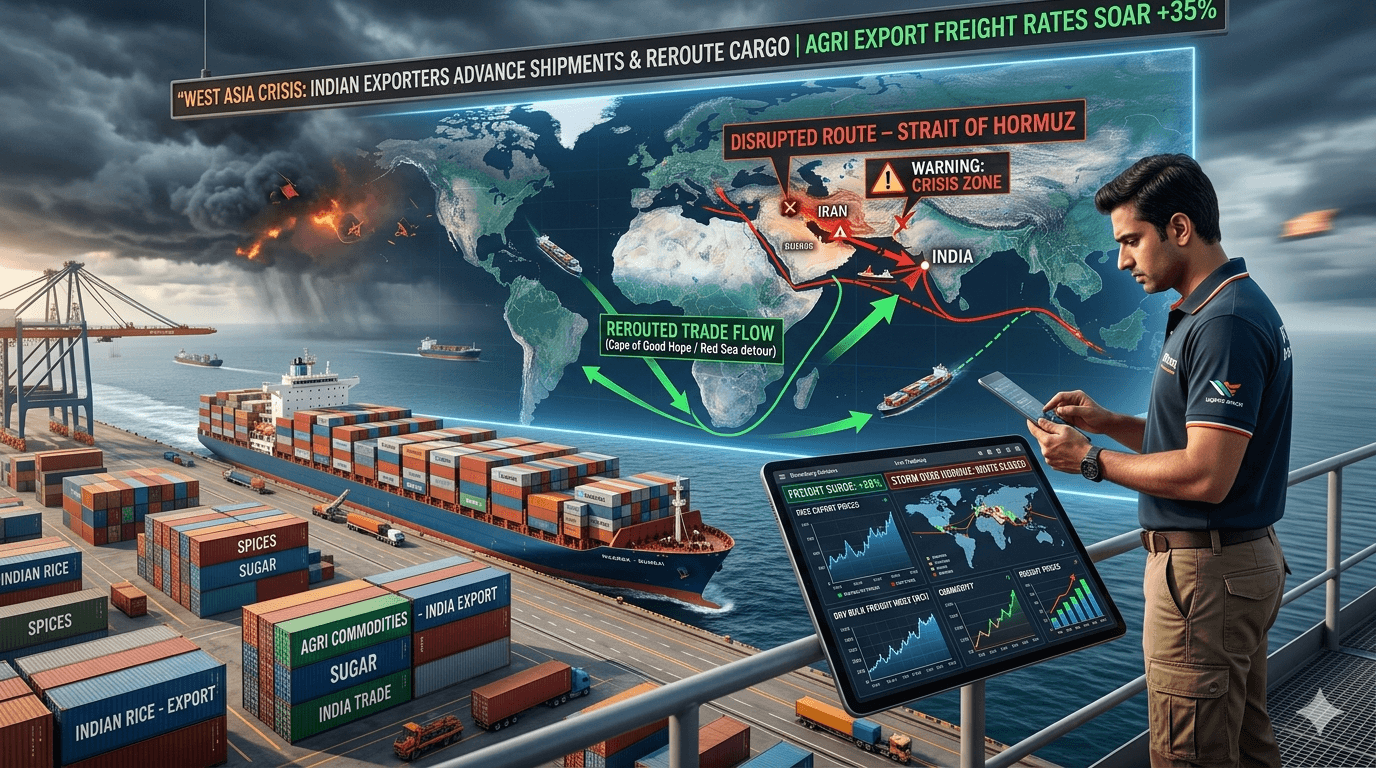
The IMEC framework was launched through a multilateral agreement involving India, the U.S., the EU, and key Middle East economies such as the UAE and Saudi Arabia. The route connects Indian ports to the Gulf through sea transport and then links to Europe via rail and shipping networks. For agri exporters, this corridor can streamline shipments of rice, spices, oilseeds, marine products, processed foods, and horticultural produce to premium markets in West Asia and Europe. By diversifying routes beyond traditional Suez-dependent shipping lanes, exporters gain a more stable trade pathway.
Faster Logistics and Improved Export Cost Efficiency
One of the biggest advantages of agricultural trade is logistics efficiency. Estimates suggest the corridor could reduce transportation time by around 40% and logistics costs by nearly 30%, improving the competitiveness of Indian farm exports. For commodities that depend on quick delivery, such as fresh fruits, vegetables, seafood, and dairy products, this improvement could strengthen India’s ability to supply high-value markets in Europe.
Strengthening Trade Connectivity Across Key Commodity Markets
The corridor is developing gradually because such large trade networks require strong diplomatic trust, infrastructure investment, and stable supply chains. Policymakers and industry leaders emphasise that the project’s architecture will evolve slowly but could ultimately redefine trade connectivity between India, the Middle East, and Europe. For Indian commodity traders, the IMEC vision signals a future where export logistics, port connectivity, and market access become more integrated across three major regions.
Trade Outlook for India’s Agri Export Sector
If fully operational, IMEC could boost India’s export value by 5–8% annually, creating stronger market access for Indian agricultural commodities and processed foods across Gulf and European markets.