The sudden fall in mandi prices
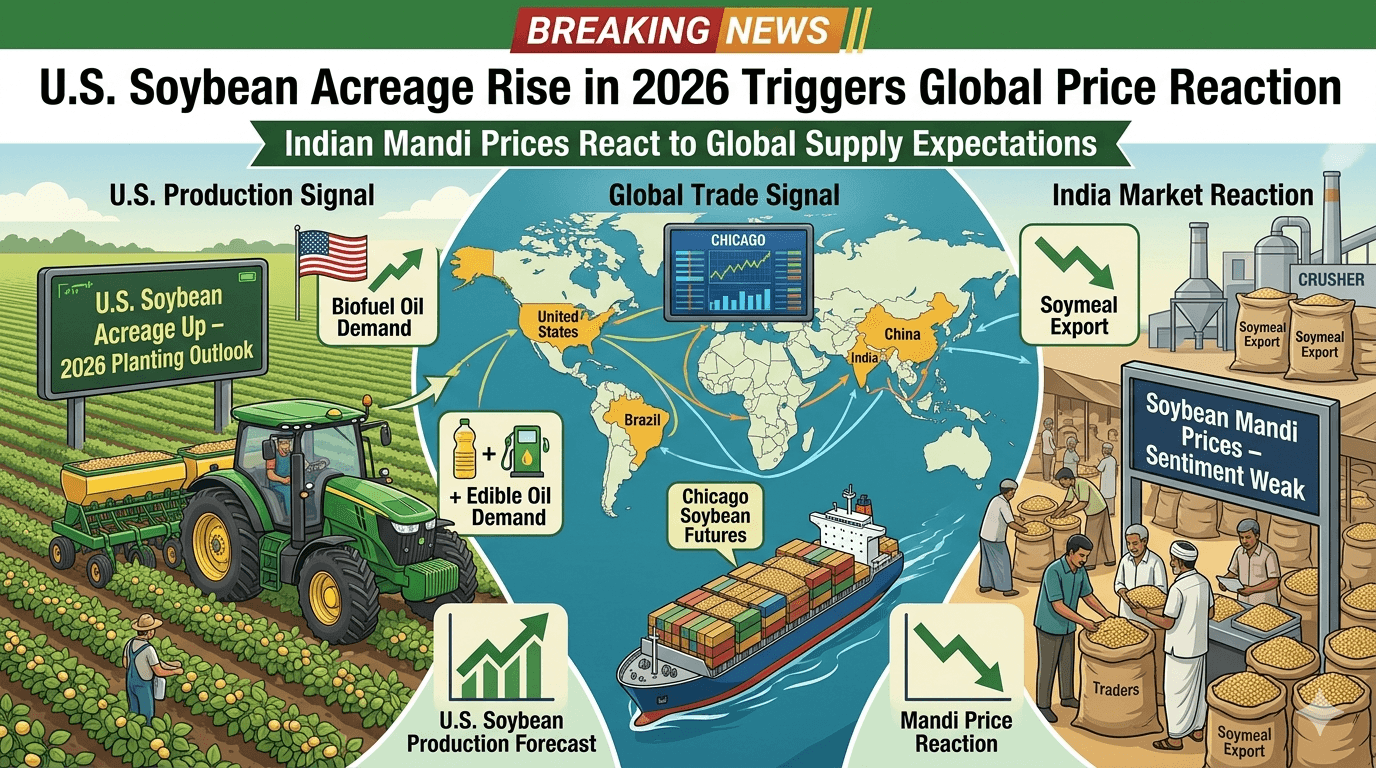
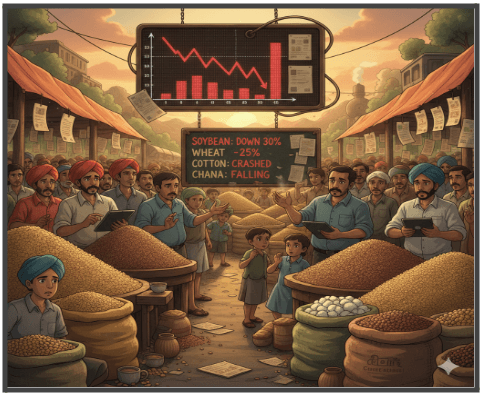
In February 2026, many farmers were surprised when they reached the mandis to sell their harvest. Instead of stable or improving rates, prices of soybean, cotton, wheat, and chana started falling. In several markets, the rates even slipped below the Minimum Support Price (MSP), which farmers usually consider the basic safety level to recover their cultivation cost. Soybean growers, especially in central India, reported a sharp drop of about ₹500–₹800 per quintal within a short period.
How the India-US trade understanding affected the market
The unusual part was that there was no major crop failure. Production and quality were normal. The main trigger was a policy development; India and the United States announced an interim trade understanding. Traders interpreted this as a sign that agricultural imports such as edible oils, cotton and feed commodities could increase in the near future. Even before any imports actually arrived, buyers became cautious and started offering lower prices. In agricultural markets, expectations often influence prices quickly, and traders avoid purchasing large quantities at higher rates.
Supply pressure and harvest arrivals made the situation worse
At the same time, market arrivals were heavy. Rabi crops were entering mandis, and supplies were comfortable. When large quantities come together and traders hesitate to buy, prices naturally weaken. As a result, open market rates in several places temporarily moved below MSP, particularly for soybeans, cotton, and pulses.
What it means for farmers and agriculture
For farmers, this situation directly affects income. When they do not receive a reasonable price, they may reduce investment in inputs or shift to other crops next season. The episode also highlights an important change agriculture today is influenced not only by weather and yield but also by global trade decisions. A policy announcement at the international level can quickly impact prices in village markets. Clear import policies and timely procurement, therefore, become crucial to maintain farmer confidence and market stability.