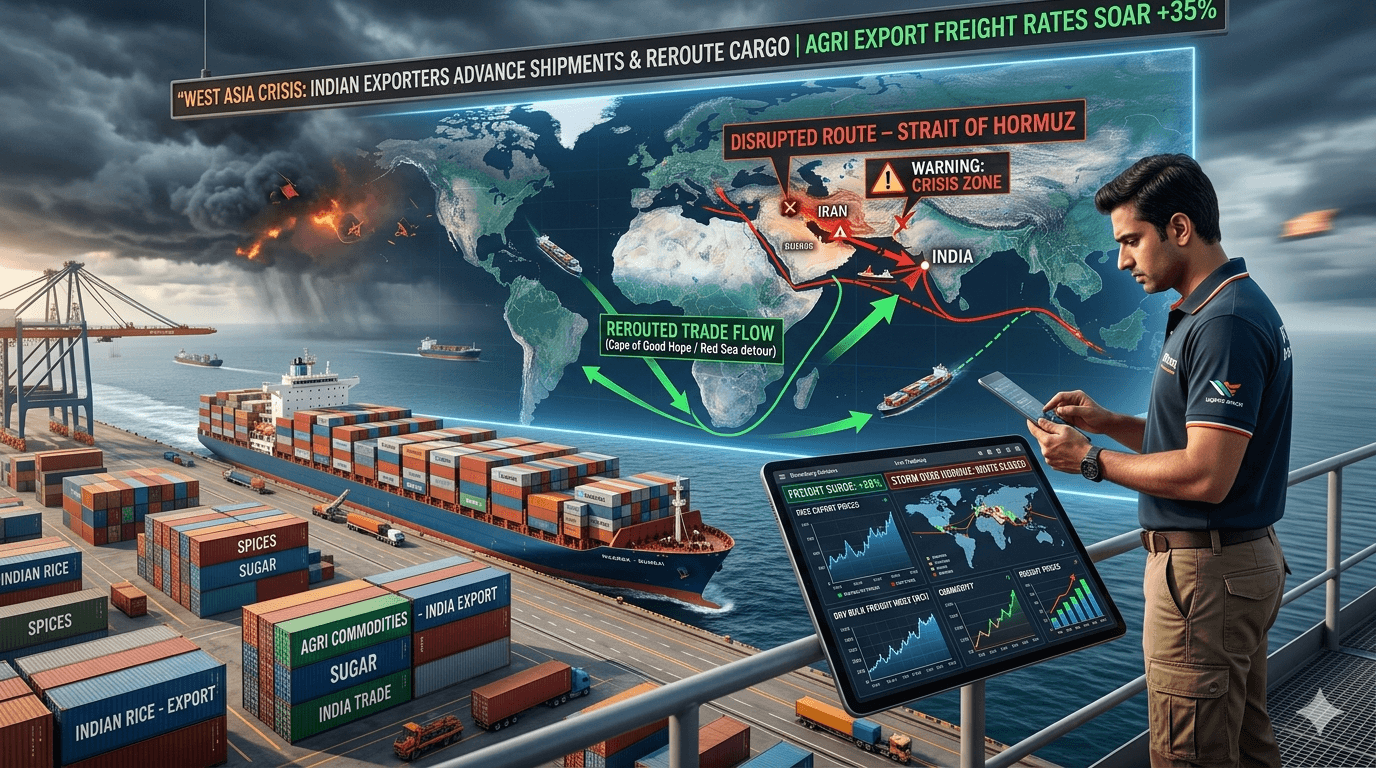
Ongoing geopolitical tensions in West Asia are creating new challenges for India’s export sector, especially for agricultural commodities. Disruptions along key shipping routes have led to higher freight costs and delays in cargo movement, prompting exporters to rethink their logistics and shipment strategies. To avoid potential disruptions in trade, many Indian exporters are now planning shipments earlier than usual and exploring alternative shipping routes to ensure that their products reach global markets on time. For agri-commodity traders dealing in rice, spices, sugar, and processed foods, these developments are becoming an important factor in export planning as well as in understanding market trends and price movements.
Shipping Disruptions Affecting Agri Commodity Movement
The conflict in West Asia has begun to affect important global maritime chokepoints such as the Strait of Hormuz, a key route for international energy and cargo trade. Any disruption in this region can quickly impact global shipping operations by altering schedules, raising insurance premiums, and increasing freight costs. For Indian exporters, this situation often translates into longer transit times, higher container freight rates, and possible delays in commodity shipments. Industry reports also suggest that shipping capacity on certain trade routes has declined as vessels are being rerouted to avoid security risks. As a result, agricultural traders exporting products such as basmati rice, spices, and oilseeds may face disruptions in their usual export cycles and logistics planning.
Early Cargo Dispatch Becoming a Key Agri Trade Strategy
To reduce uncertainty caused by the ongoing situation, many exporters are now planning their shipments earlier than usual. Logistics companies are keeping a close watch on shipping line schedules, adjusting contracts when needed, and maintaining flexible inventory planning to avoid disruptions. By dispatching cargo in advance, traders can reduce the risk of sudden freight rate increases, secure container space before shortages arise, and ensure that export commitments with overseas buyers are fulfilled on time. For agri-commodity traders, this approach also helps maintain more stable export volumes even when global trade conditions remain volatile.
Alternate Trade Routes Emerging in Agri Export Logistics
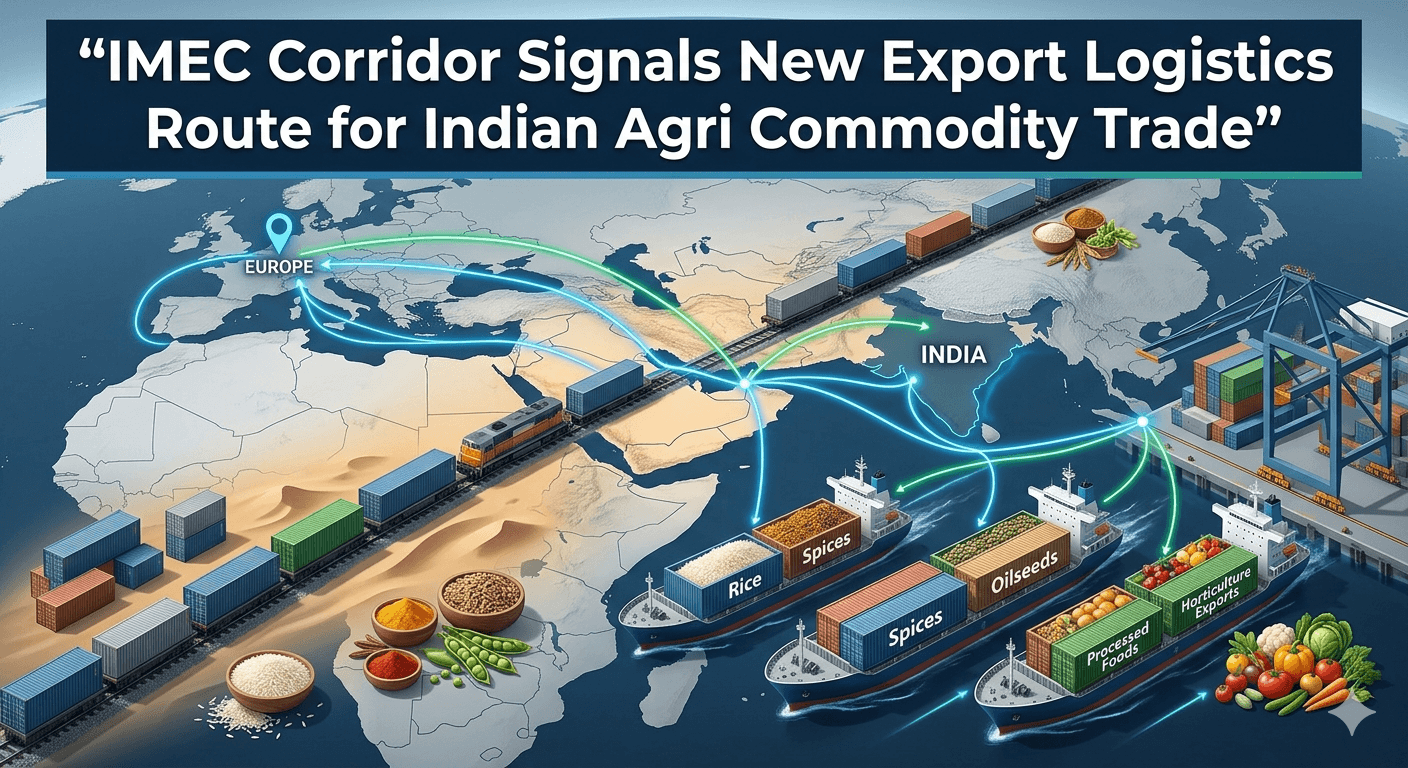
Another strategy Indian exporters are adopting is the use of alternate shipping routes to avoid high-risk zones. In some cases, cargo is being redirected through longer maritime corridors to ensure safer passage for shipments. While these alternative routes can increase travel time and raise freight costs, they help maintain the steady movement of goods in global commodity supply chains. For agri-export businesses, keeping delivery schedules reliable is extremely important, as timely shipments help maintain strong and long-term relationships with buyers in key markets such as the Middle East and Europe.
Outlook for India’s Agricultural Trade
Despite geopolitical disruptions, India’s agricultural export sector is showing resilience. Traders and exporters are adapting quickly by adjusting logistics, diversifying routes, and improving shipment planning. If tensions persist, freight costs and delivery timelines will remain key variables influencing agri commodity trading margins. However, proactive logistics strategies are helping Indian exporters sustain their presence in global agricultural markets.