Growing Import Demand in India’s Agri Commodity Trade
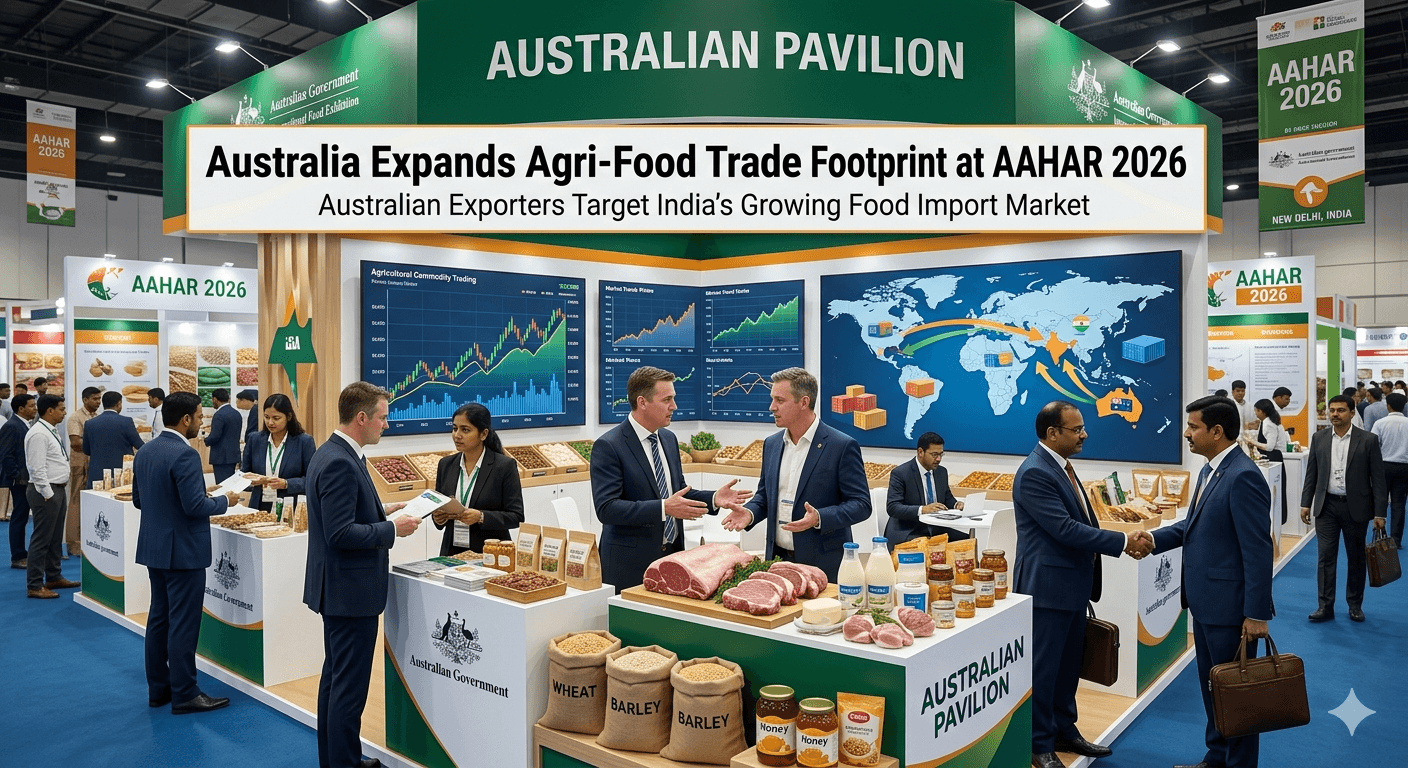
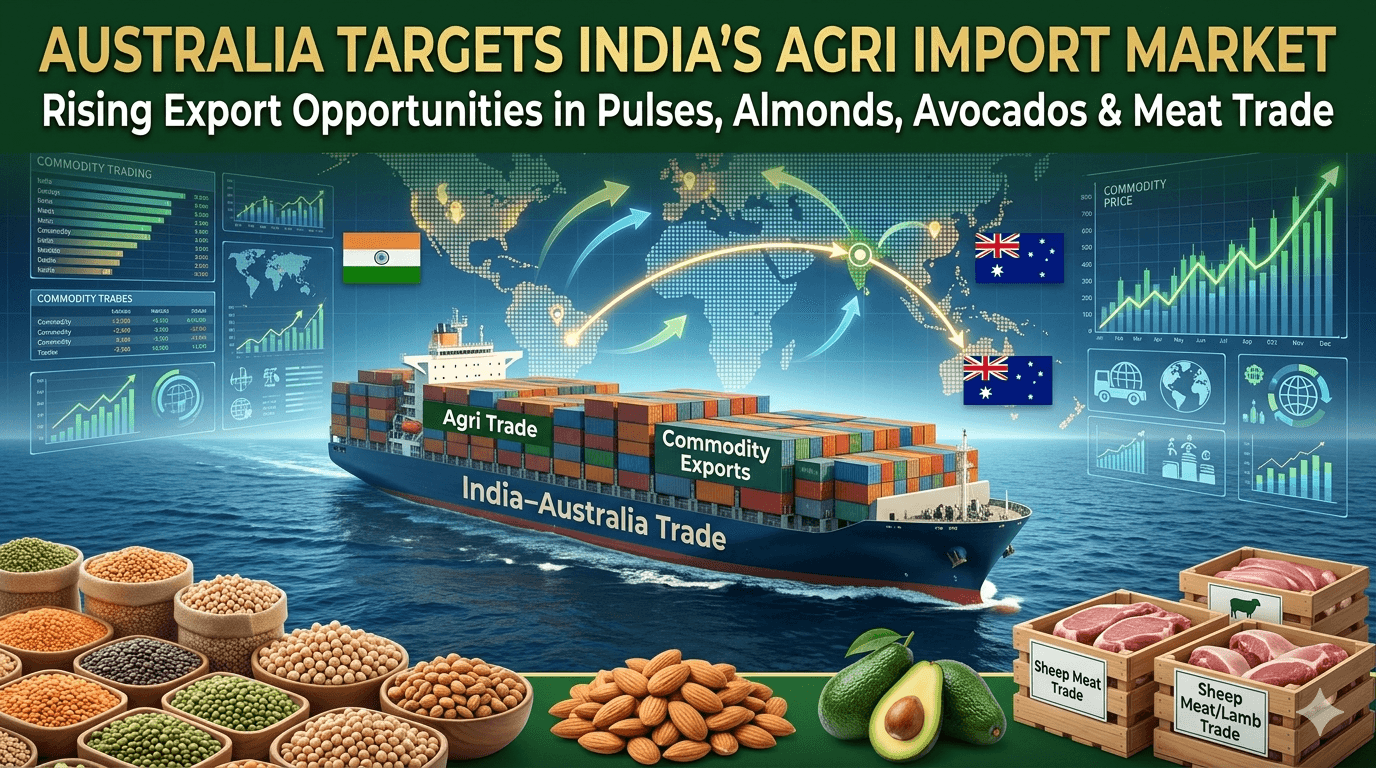
Australia is intensifying its focus on India’s agricultural import market, aiming to expand shipments of key agri commodities such as sheep meat, lamb, avocados, almonds, and pulses. The push is largely driven by improved market access under the Economic Cooperation and Trade Agreement (ECTA) between the two countries.
For Indian agri traders and food processors, this development signals a potential increase in inbound supply of premium food commodities and protein products. Australia sees India as a high-growth demand center where rising incomes, expanding retail chains, and a rapidly growing HoReCa sector are boosting consumption of imported food ingredients and value-added agricultural products.
Pulses Trade and Supply Chain Signals
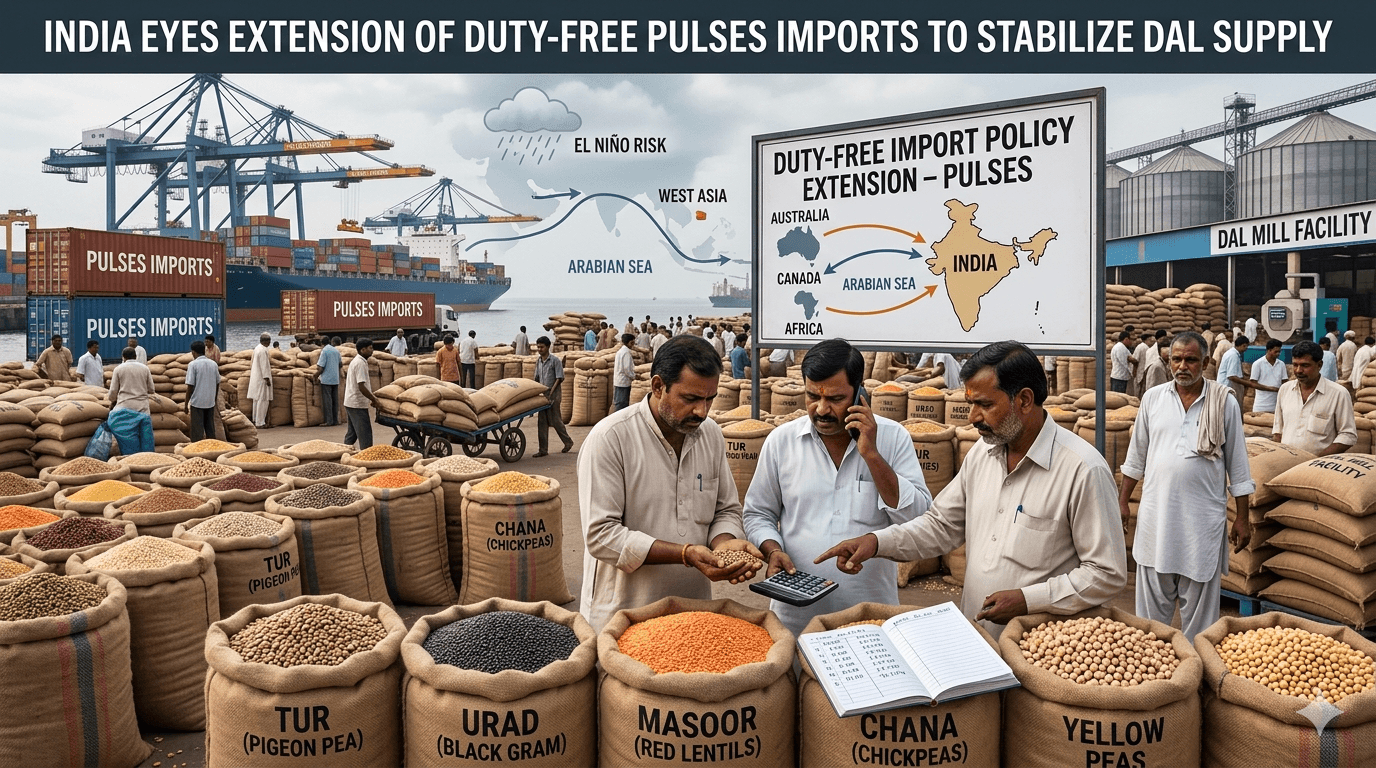
Pulses remain one of the most important trade segments in the India–Australia agricultural corridor. India imports nearly 18–20% of its total pulses requirement, with Australia among the key suppliers of chickpeas and lentils.
With domestic supply fluctuations and steady consumption growth, Australian shipments help stabilize India’s pulse supply chain and support price balance in the domestic commodity market. For traders, this means sustained import opportunities and diversified sourcing options during supply gaps in the Indian crop cycle.
Trade Agreement Driving Market Access
The India–Australia ECTA, implemented in 2022, has opened preferential tariff access for a wide range of agricultural products. Under the agreement, most tariff lines between the two countries are gradually being liberalized, creating stronger bilateral commodity flows and new trade channels. Beyond ECTA, both countries are negotiating a broader Comprehensive Economic Cooperation Agreement (CECA), which could further deepen agri-trade integration and expand product categories in the bilateral agricultural basket.
Implications for India’s Agricultural Trading Ecosystem
For India’s agri commodity market, Australia’s export push highlights a strengthening trade corridor that could reshape import dynamics in pulses, nuts, horticultural produce, and meat products. Indian importers, food processors, and commodity traders may see greater sourcing flexibility, diversified supply streams, and competitive pricing opportunities as Australian exporters increase market participation. At the same time, Indian exporters continue to ship products such as cotton, cashew, coffee, tea, fruits, and dairy products to Australia, keeping the bilateral agricultural trade channel balanced.
Trade Outlook:
With trade agreements improving market access and demand for premium food products rising, the India–Australia agri trade corridor is expected to witness stronger commodity flows, deeper supply chain partnerships, and expanding opportunities for traders on both sides.