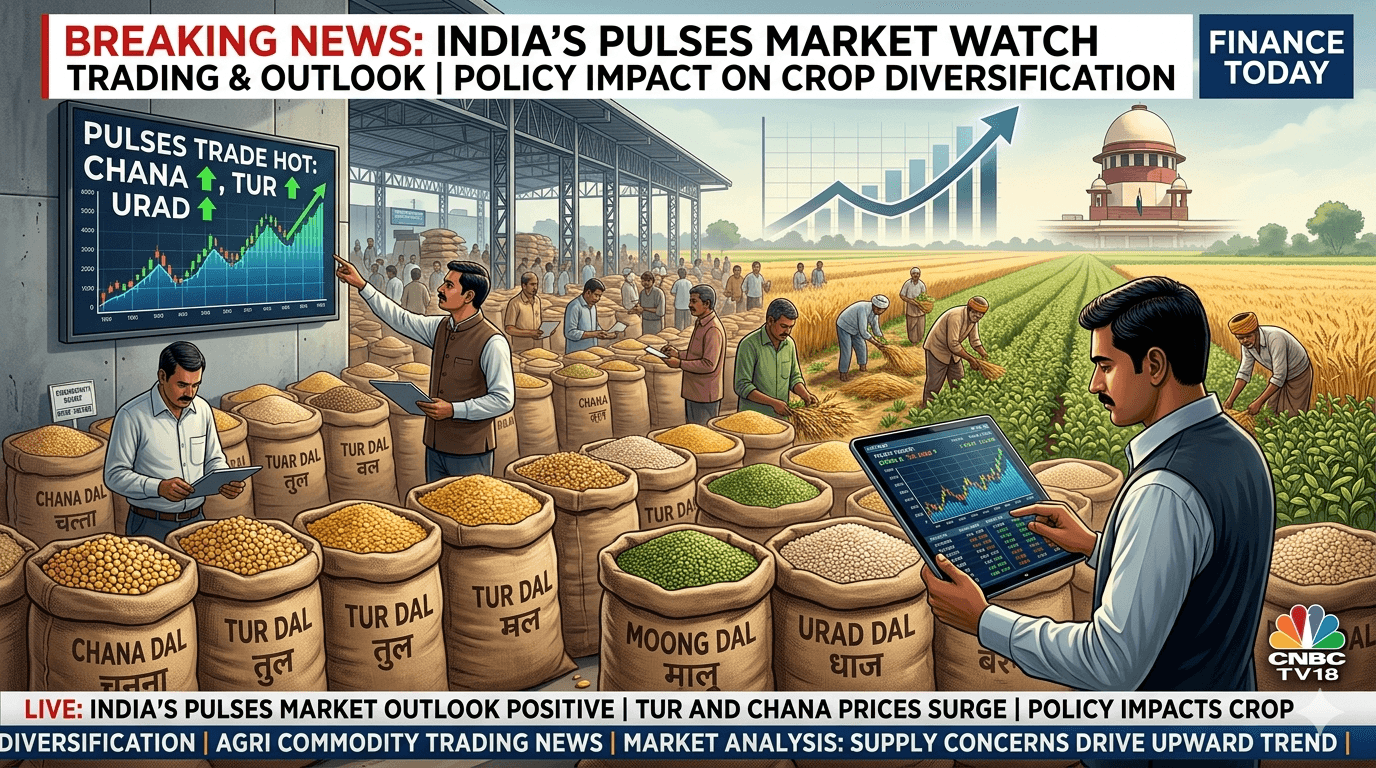
India’s agricultural policy discussions are increasingly shifting toward crop diversification and strengthening domestic pulse supply chains, a development closely watched by agri-commodity traders, processors, and mandi participants. Recently, the Supreme Court of India asked the central government to review its policy framework and encourage farmers to expand pulse cultivation instead of focusing heavily on wheat and paddy.
For India’s agricultural markets, this policy push could influence future supply trends, procurement patterns, and trading volumes in pulse commodities such as tur, moong, urad, and chana.\
India remains one of the world’s largest producers and consumers of pulses, yet domestic production often struggles to meet demand due to the heavy dependence on paddy and wheat cropping cycles, which has limited pulse acreage in many regions. The court suggested that the government create a remunerative policy structure, including price support and procurement mechanisms, to motivate farmers to shift more acreage toward pulse cultivation. From a trading perspective, such a shift could increase market arrivals of pulse commodities in mandis, expand domestic procurement volumes, and strengthen India’s self-reliance in pulse supply chains. For agri traders, higher pulse production would gradually deepen liquidity and trading activity in domestic pulse markets.\
Import Policy and Global Pulse Trade Impact
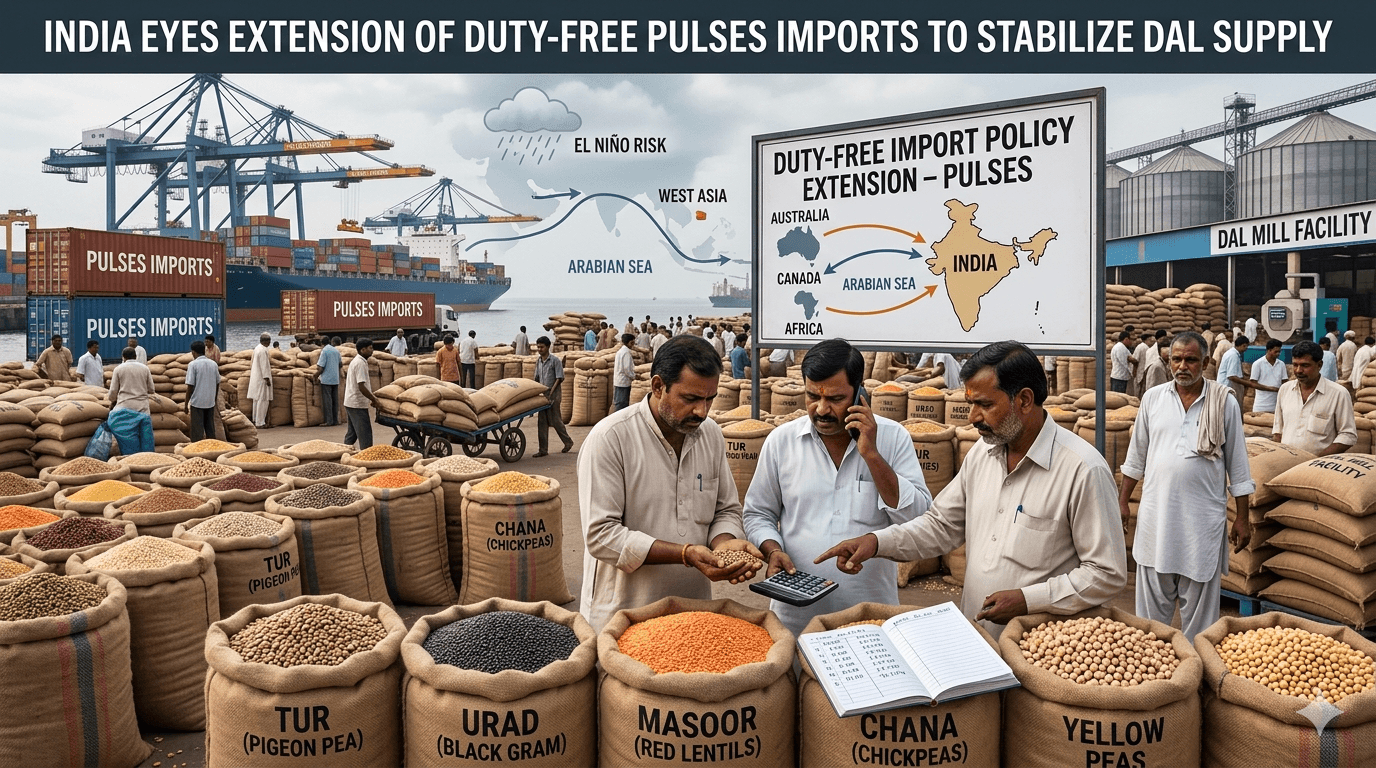
Another major issue affecting the pulse market is the influx of cheap yellow pea imports, which has impacted domestic price realization for Indian pulse farmers. These imported yellow peas have been entering the market at significantly lower prices, putting pressure on commodities such as tur, moong, and urad that receive government MSP support. If the government revises its import policy or introduces tighter regulations, it could lead to bullish sentiment in domestic pulse prices, reduce dependence on imported pulses, and strengthen demand for locally produced pulse varieties.
This could reshape India’s pulse trading landscape in both spot markets and long-term procurement cycles.
MSP Procurement and Market Price Signals
Pulse cultivation incentives are closely tied to Minimum Support Price (MSP) procurement and government buying operations, and stronger procurement signals could improve farmer participation in pulse farming while stabilizing mandi prices. For agricultural traders and processors, greater policy clarity on procurement could support better price discovery in pulse mandis, encourage increased warehouse stocking and forward trading activities, and strengthen overall market confidence in the domestic pulse supply chain.
Trading Takeaway
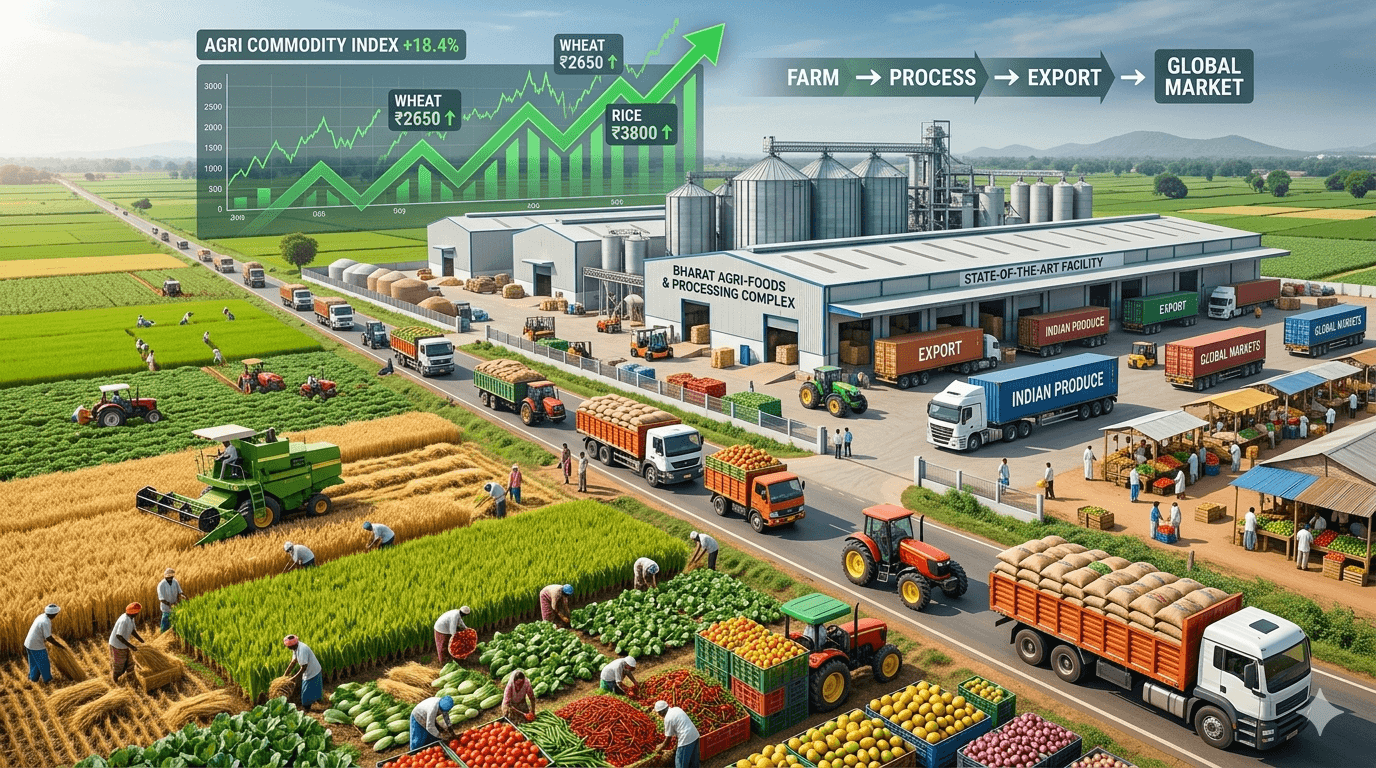
The judiciary’s push for crop diversification highlights a broader structural shift in Indian agriculture, and if supportive policy reforms follow, pulse commodities could emerge as a stronger segment within India’s agri-trading ecosystem. For market participants, key factors to watch include government procurement policies for pulses, import regulations on yellow peas and other pulse varieties, and changes in farmer acreage allocation. Together, these developments have the potential to influence supply dynamics and shape the next bullish cycle in India’s pulse commodity markets.