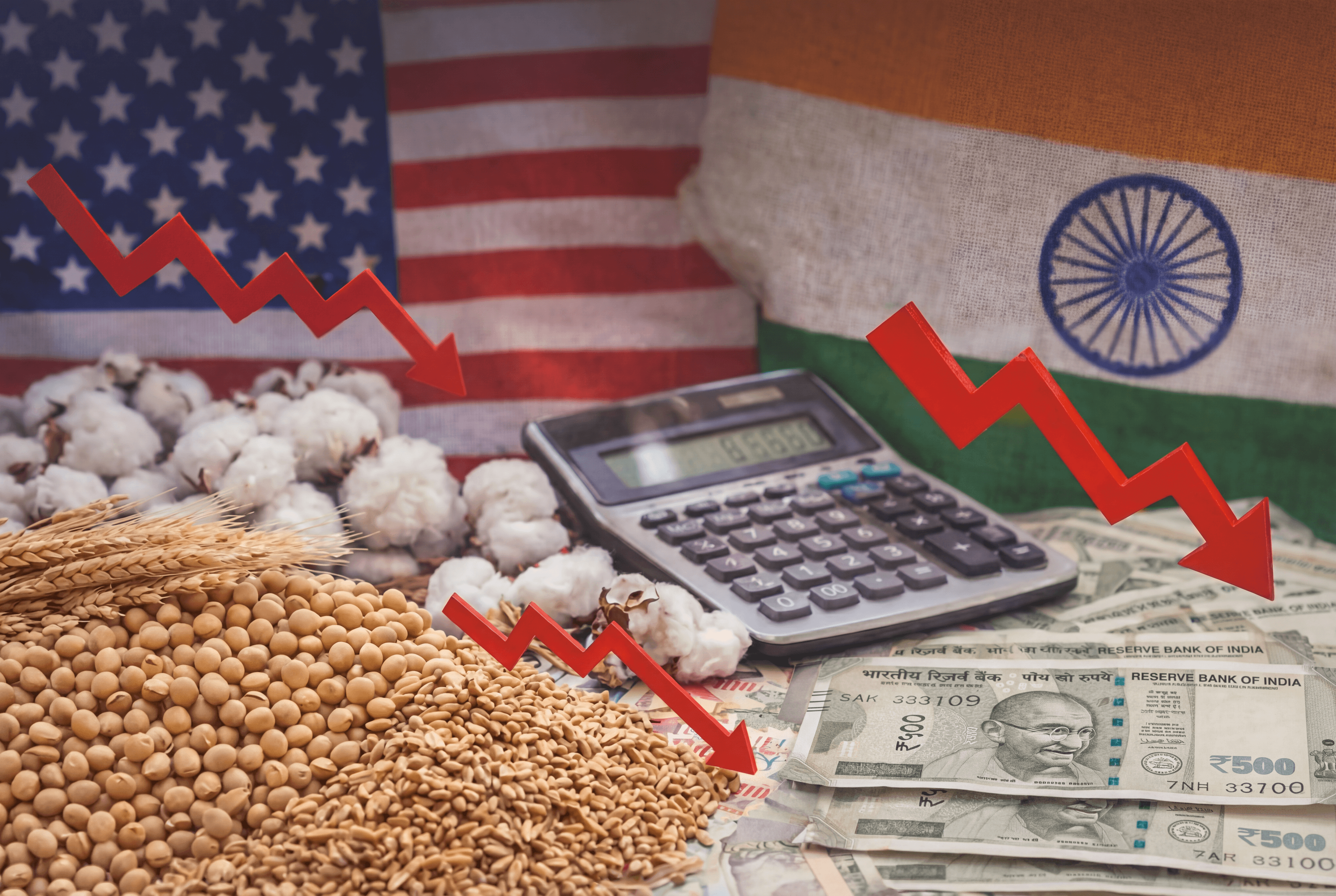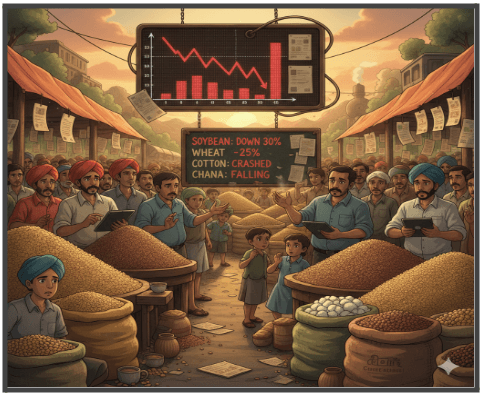
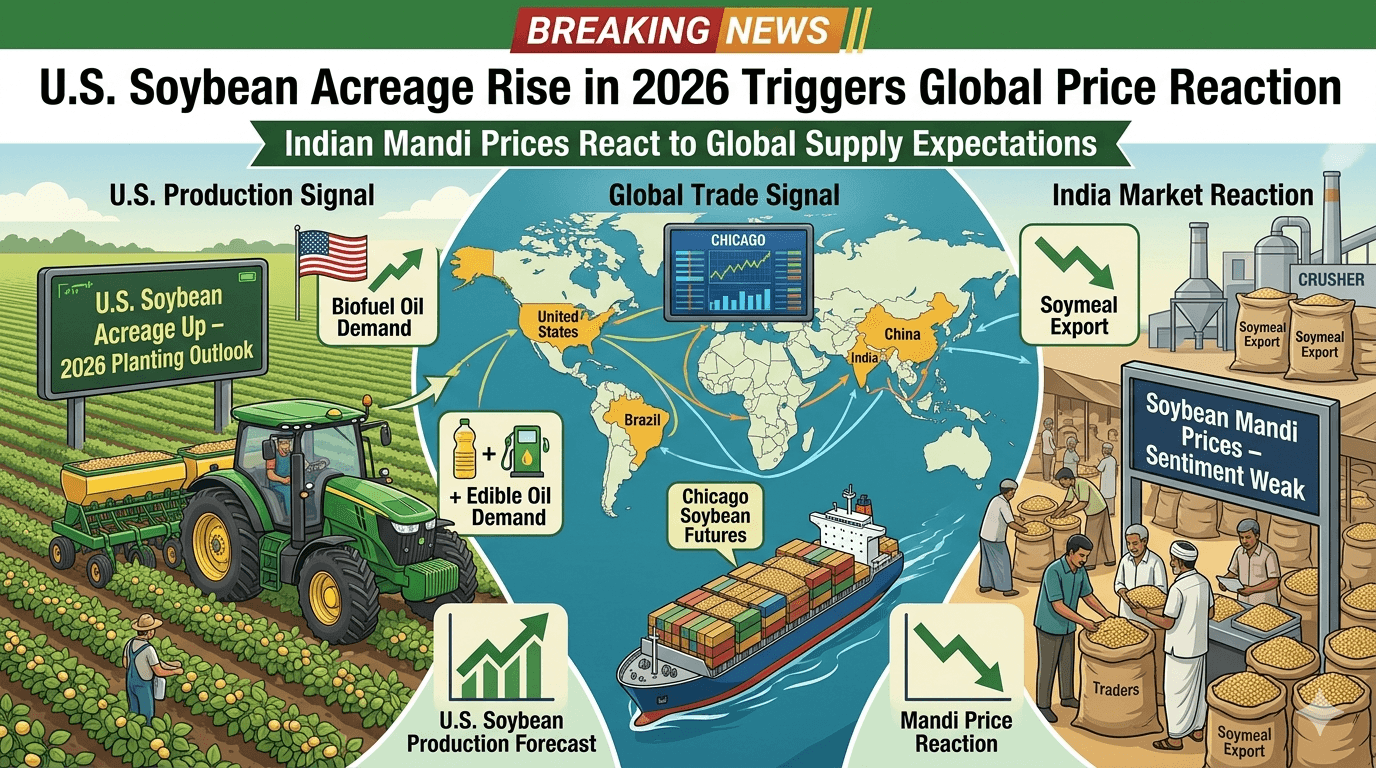
U.S. farmers will plant more soybeans and less corn in 2026 was not just a farming update; it was an early signal for global prices. The market quickly understood that the U.S. is preparing for strong demand from the edible oil and biofuel industries, and soybean exports could reach a two-year high.
For Indian traders, soybean prices are never purely domestic. Our market follows global signals, Chicago futures, Brazilian shipments, and Chinese buying, all of which influence mandi rates. So when a major exporter like the U.S. indicates higher production, Indian traders immediately reassess price risk. As a result, mandi sentiment weakened even before the new crop season.
Why Prices Fell Without Extra Supply
Commodity markets react to expectations, not actual harvest. The moment traders anticipated a larger U.S. supply in the coming months, buyers became cautious. No one wants to buy aggressively today if cheaper cargo may arrive tomorrow.
The price transmission works in a chain:
Higher U.S. acreage → higher global availability → softer international prices → reduced export parity → weaker mandi bids
Because of this expectation, soybean prices in several Indian mandis started softening even though there was no major domestic supply pressure. Traders knew that if global prices fell, Indian soymeal exports would become less competitive. Crushers then lowered procurement rates. When soyameal realization declines, crushing margins shrink, and crushers naturally slow down buying in mandis.
Export Competitiveness: India’s Structural Limitation
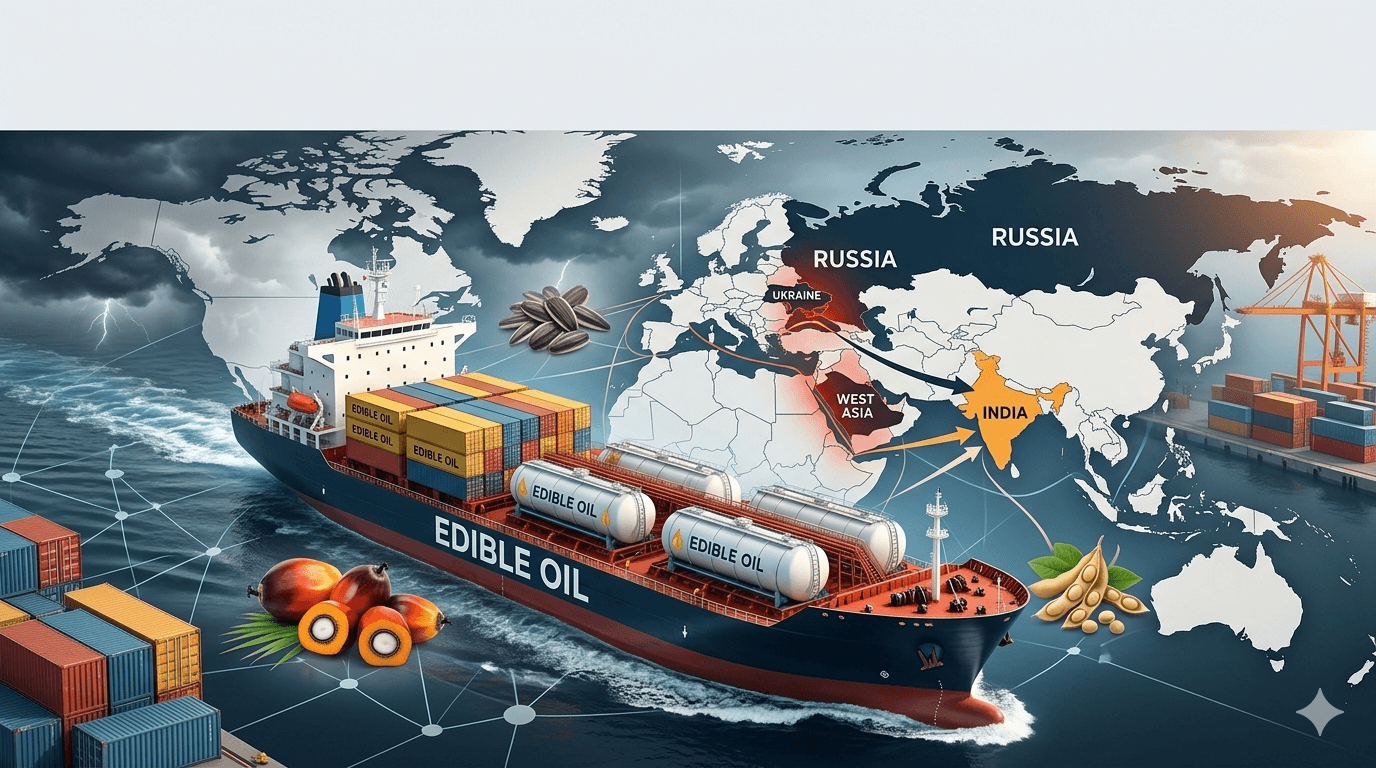
India is not a dominant oilseed exporter. We export soymeal mainly when the global supply is tight. When both Brazil and the U.S. have comfortable stocks, importers prefer them due to scale, reliable supply, and better logistics. Even a small fall in international prices hurts India because our export costs are relatively higher; transport, aggregation, and port handling increase the final cargo cost. So if world prices drop slightly, Indian shipments become expensive compared to South America. Expectations about edible oil imports also affect prices. If the market believes imports will remain easy, domestic oil prices stay capped. Lower oil prices reduce crusher profitability, and that directly pushes soybean mandi prices down.
Outlook for Traders and Crushers
Traders now believe global soybean supply will remain comfortable unless weather problems occur in the U.S. or Brazil. Crushers are operating with tight margins because both soymeal export prices and domestic oil prices are under pressure. Therefore, cautious procurement in mandis is likely to continue. Over the next 3–6 months, the market direction will depend mainly on three factors: U.S. planting progress, Brazilian weather, and Chinese import demand, more than India’s own production. If global weather remains normal, soybean prices in India are expected to move sideways to slightly weak rather than strongly bullish.